Description
About This Course
This class is approved by the NCAA.
This class is part of the MyFunScience online homeschool classes, which include a wide range of science courses for middle school and high school students.
Chemistry is the study of the properties and interactions of matter at the atomic level—in other words, it explains what everything is made of and how substances change when they interact. From why ice melts to how acids and bases react, chemistry helps us understand the science behind the world around us.
In this high school rigorous Chemistry course for homeschool students, we will explore key topics such as properties of matter, atomic structure, the periodic table, chemical bonding, nomenclature, the mole, chemical equations, stoichiometry, gas laws, phase changes, thermodynamics, acids and bases, and pH. Through a live online chemistry class, students will discover how atoms combine, reactions occur, and chemical principles explain everyday phenomena.
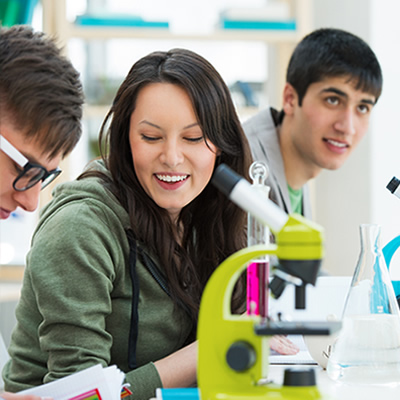
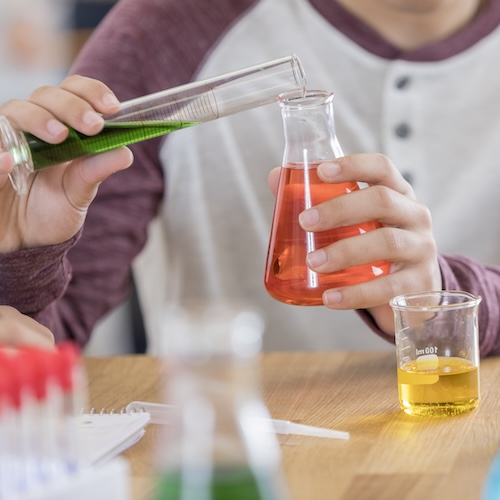
Labs are an exciting and important part of the course. Students will perform experiments focused on making observations, collecting data, analyzing results, drawing conclusions, and writing clear lab reports. Along the way, students will strengthen their understanding of scientific inquiry and the scientific method while developing real laboratory skills.
Students participate in a live online chemistry class led by an experienced instructor who explains complex topics and answers questions in real time.
This engaging high school homeschool chemistry course provides a strong foundation in chemistry and physical science, preparing students for advanced courses such as Physics or Anatomy & Physiology.
Watch a Sample Live Online Class Session
Recommended Grade Level
- Grades 9–12
Prerequisites
Curriculum
- Exploring Creation with Chemistry, 2nd Edition by Jay Wile
ISBN: 978-1932012262 - Questions about materials? Contact the instructor.
- Lab kit available through Home Science Tools.
Lab Science
- Students will complete experiments using the scientific method and write lab reports at around 30+ hours a for a full credit class.
Syllabus Download
Note: The lab kit is configurable. Families may omit items they already own.
Semester Topics Overview
Fall Semester
- Measurement and Factor-Label Method
- Density and Significant Figures
- Energy and Heat
- Periodic Table and Atomic Theory
- Naming and Classifying Compounds
- Balancing Chemical Equations
- Reaction Types
- The Mole and Stoichiometry
- Atomic Structure and Quantum Mechanics
- Molecular Structure and Periodicity
Spring Semester
- Polyatomic Ions and Molecular Geometry
- Acids, Bases, and Molarity
- Solutions
- Gas Laws
- Thermodynamics
- Kinetics
- Equilibrium
- Redox Reactions
Estimated Workload
Students typically spend two weeks per module, completing seven modules over the semester.
For each module, students read approximately 25 pages and complete about 25 textbook problems. Additional online practice is often assigned for reinforcement. Each module includes one to three hands-on experiments, and students submit four formal lab reports per semester.
The publisher recommends approximately one hour per day for Chemistry. Actual time varies based on student readiness and mathematical strength.